Is It Legal to Download TikTok and X Videos? A Plain Guide
Jun 8, 2026
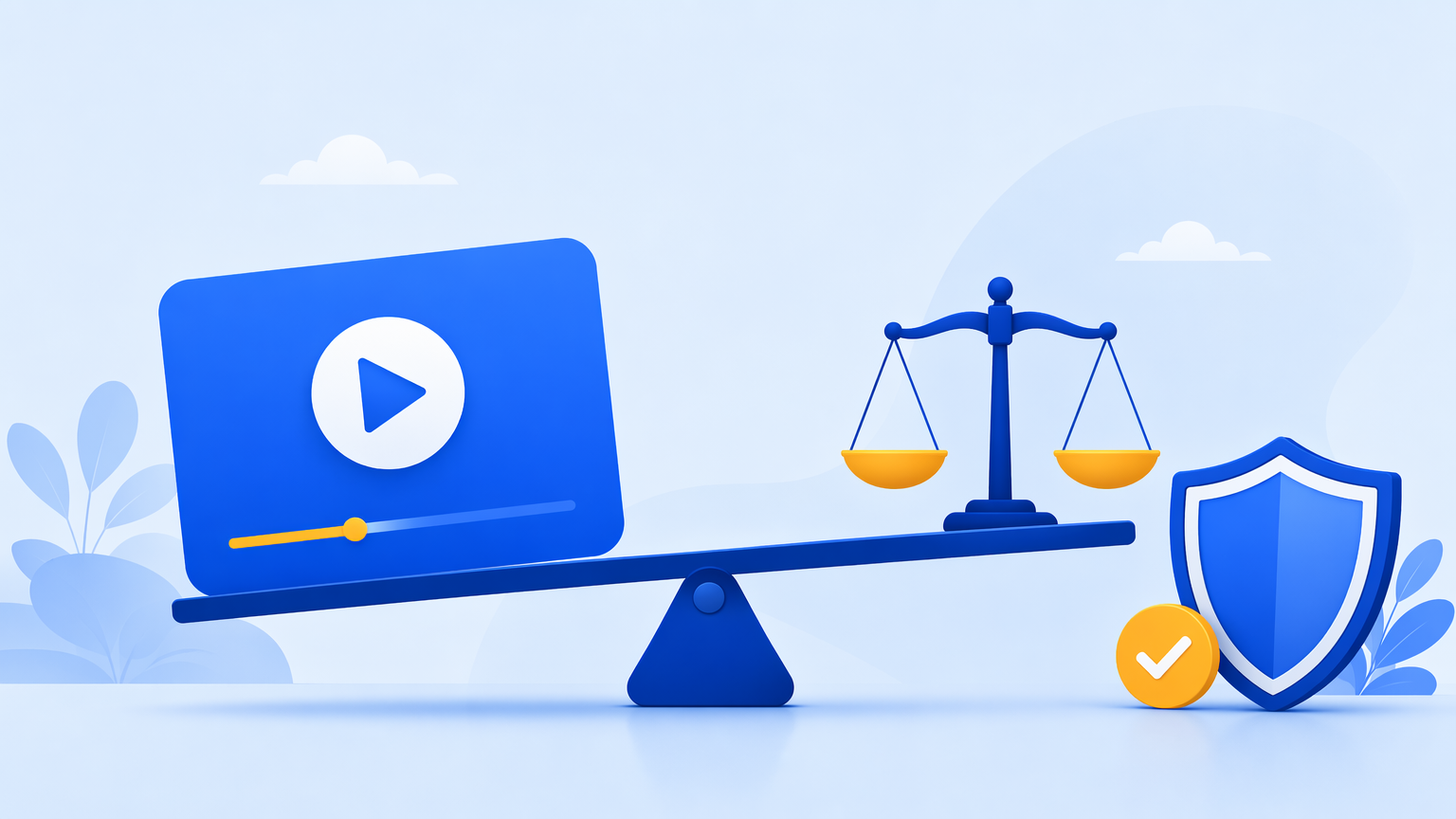
Saving a public TikTok or X video for your own private, offline viewing usually sits in a tolerated gray area — but redistributing or monetizing someone else's content is a different matter entirely. That one-line answer covers most cases, and the rest of this post unpacks why. First, the important caveat: this is general information to help you think clearly about the question, not legal advice. If real money or a real dispute is involved, talk to a qualified lawyer in your country.
The reason "is it legal to download videos" doesn't have a single yes-or-no answer is that two separate questions hide inside it: can you make a copy, and what are you allowed to do with that copy afterward. Keep those apart and almost everything below falls into place.
Personal use vs. redistribution
This is the single most useful distinction to hold onto.
- Personal use — saving a clip to rewatch offline, keeping a copy of your own post, or referencing something privately. This is the low-risk end of the spectrum, and it's what most people actually want.
- Redistribution — re-uploading someone else's video, dropping it into your own content, or using it commercially. This is where problems usually start, because you're now publishing work you don't own.
Downloading a file is one act. Republishing it is another. The law tends to care a lot more about the second.
Copyright basics
A video is protected by copyright the moment its creator records it — no registration, no copyright symbol, and no "all rights reserved" notice required. That means the creator (not the platform, and not you) holds the rights to copy, share, and adapt it.
The key thing people get wrong: downloading a copy doesn't transfer any of those rights to you. Having an MP4 on your hard drive is not the same as having permission to use it. Saving it for yourself is one thing; reposting it, remixing it into your own upload, or running it in an ad are uses that can infringe the original creator's copyright, file on your device or not.
What the platform terms say
Separate from copyright, there's the platform's own rulebook. TikTok's and X's terms of service generally restrict scraping and bulk downloading, and they provide in-app save features precisely so they can set the boundaries on them. Using a third-party downloader may go against those terms even in cases where it isn't itself illegal.
This is worth understanding clearly: breaking a platform's terms is a contract issue between you and that platform, which is distinct from copyright law. The two can overlap, but they're different systems with different consequences — a terms violation typically risks your account, while a copyright violation risks a claim from the rights holder.
Your own content is the clear-cut safe case
If you posted the video yourself, downloading it is about as uncomplicated as it gets — you own it. This is by far the most common legitimate reason people reach for a downloader: retrieving a clean, watermark-free copy of their own upload for backup, re-editing, or cross-posting. (If you're wondering why the in-app save adds a stamp in the first place, that's covered in why your TikTok video has a watermark.)
This framing is exactly how VidGrably is meant to be used: it only resolves public posts, requires no login, and never hosts or stores the video — it just hands you the file. What you do with that file, and whether you have the right to it, is on you.
Common situations, a quick read
Most real-world questions map onto one of four scenarios. Roughly, from safest to riskiest:
- Backing up your own post: clear-cut. You own it, so do what you like.
- Saving a public clip to rewatch offline: generally low-risk personal use — the tolerated gray area mentioned at the top.
- Re-uploading someone else's video to your account: high risk. This is republishing their copyrighted work without permission.
- Using a clip in monetized content or an ad: highest risk. Get explicit permission or a proper license before you do this.
These aren't formal legal rulings — they're a sensible gut-check for where you stand before you hit Download.
Does it vary by country?
Yes, meaningfully. Copyright exists almost everywhere, but the exceptions to it differ a lot:
- United States has fair use — a flexible, four-factor test that can cover commentary, criticism, news, teaching, and parody.
- The UK and many others have fair dealing, which is narrower and limited to specific listed purposes.
- Some countries have explicit private-copying rules that carve out personal, non-commercial copies; others don't recognize that at all.
What's tolerated in one jurisdiction may not be in another, and the platform's terms apply globally on top of all of it. The safe default, wherever you are: assume the creator's rights apply and act accordingly.
A word on fair use
Because "fair use" gets thrown around as if it's a magic password, it's worth being blunt: fair use is a fact-specific defense decided case by case — not blanket permission. A court weighs things like the purpose of your use, how much you took, and whether it harms the market for the original. Adding a caption, crediting the creator, or saying "no copyright infringement intended" does not automatically make a use fair. Sometimes commentary or criticism genuinely qualifies; sometimes superficially similar uses don't. Don't assume you're covered just because your use feels transformative.
The bottom line
So, is it legal to download TikTok and X videos? For your own content, yes — plainly. For public clips you keep to yourself for offline viewing, you're usually in tolerated territory. The moment you start redistributing or monetizing someone else's work, you're in copyright territory and should get permission or a license first. Save what's yours or what you have the right to use, keep it private unless you've cleared the rights, and credit creators as a matter of course.
And once more, because it matters: this is general information, not legal advice. When real money or wide redistribution is on the line, get a qualified lawyer involved — and if you're saving clips in bulk or to edit on a bigger screen, downloading on a PC makes the rights-cleared workflow a lot easier to manage.